
He said the country has witnessed a journey from indecisiveness to clarity and decisiveness.

'When there is unlocking, there is demand revival.' 'This is going to be the main growth engine in this kind of an economic scenario.'

Of the seven surveys presented under Modi govt, predictions of three were quite close to the actual GDP growth rate, one saw the base year change in between, but the last three were way off the mark.

'In India, most funds have one or at most two platforms, but we are the only one which has four -- growth equity practice, real estate practice, a special situation and credit platform, and infrastructure.'

N Sundaresha Subramanian, Karan Choudhury and Shreya Jai report on the sorry condition of homebuyers who invested in Jaypee Infratech and the Amrapali group's Noida-based projects.

The failure to reform has meant that there is no buzz about job opportunities, or about urban opportunities enticing young people off the farms. And it is this failure that has contributed to the widespread disappointment that threatens to make the next general elections closer than expected, says Mihir S Sharma.
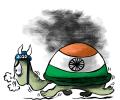
'If India can only grow at 5%, why bother spending time on the country?' asks Akash Prakash.
'I would like to convey the message to your readers that the prime minister himself is directly seized of the situation on the ground. He periodically reviews the situation on the ground and how it is moving forward, taking inputs from economists, business leaders, chambers of commerce.'

While Waryam Singh was a non-executive director at HDIL, he is listed as one of the promoters of the company and had relations, including shareholding, with several other entities controlled by the Wadhawans, the HDIL founders.

'There has been far too much overconfidence about the size and composition of the Indian consumer economy,' notes Mihir S Sharma.

The trio, 'twin shocks' of demonetisation and GST, 'twin balance sheet' problem that has been weakening India's banking system and the 'twin deficit' problem will continue to challenge economic management and performance in the year ahead, says Shankar Acharya.

'We all wanted a strong Centre with a decisive mandate from the people, to allow them to take bold decisions.'
'There are deeper, underlying, forces at work and we need institutional arrangements to guard against them.'

Srei Infrastructure's vice-chairman -- and former Assocham president -- Sunil Kanoria discusses the Kanoria businesses and his impression of the Modi government with Ishita Ayan Dutt and Namrata Acharya.

Six months into his new role, Vishal Wanchoo, president and chief executive officer, GE, South Asia, speaks to Jyoti Mukul about how its horizontal business lines of additives and digital are playing across its verticals.
It is worth reconsidering if this fascination with either having a single party majority or Modi's leadership or, indeed, both, is such a great idea for India, says Udit Misra.

Total net debt-equity ratio improves for third consecutive year, while investment in new projects hits a 10-year low, says Krishna Kant.

'The new government will have to contend with slowing economic growth, weak private investment, anaemic exports and vulnerable external imbalances, a stressed financial system, mounting fiscal pressures (including high government debt-to-GDP ratios) and an exceptionally bad employment situation,' says Shankar Acharya, former chief economic adviser to the Government of India.

Shaktikanta Das said in Washington, DC, that there was nothing sacrosanct about the 25 bps rate cut and that monetary policy could be well served by calibrating the size of the policy rate to the dynamics of the situation, and the size of the change itself could convey the stance of policy.
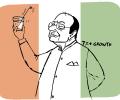
'The attempt to build a negative narrative about India's economic performance is disingenuous.' 'For the investors as well as the targeted beneficiaries of welfare schemes, the ground reality is very different,' argues Rajiv Kumar, vice-chairman, NITI Aayog.

'Gloom is nowhere in sight, with healthy foreign exchange reserves, a strong rupee, healthy tax collections, corruption and crony capitalism under check,' argues Gopal Krishna Agrawal.

'The BJP has shown signs lately of returning to its trader mindset.' 'Several strong emotions get meshed in this: Nationalism, protectionism, mercantilism, and arrogance,' points out Shekhar Gupta.

India has a unique window of opportunity to effectuate long-lasting structural change in its banking sector, says Riju Agrawal.

Bankers seem to be pleased with the government for keeping its promise of not interfering in operational matters, but are apprehensive about the intense scrutiny of their functioning.

There are also signs that the private sector investment cycle is slowly coming back, as capacity utilisation figures across industry continue to slowly creep up. A pickup in investments will front load profitability, says Akash Prakash.
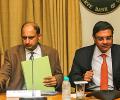
'Those who come from outside are surprised at the relatively small strength of the RBI supervisory cadre, relative to the needs of the country and the needs of the financial sector.'
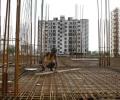
Keki Mistry, vice chairman and CEO, HDFC tells Joydeep Ghosh and Chirag Madia that unlike some other players it never went for excesses and never took unreasonable risks.
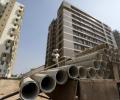
According to property consultancy firm Knight Frank, only 19 states and UTs have a functional portal in place, that too with a lot of information dissymmetry across data points
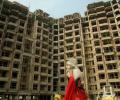
A decline in the real estate sector, rising debt and the company's alleged involvement in 2G scam caused damage to the business and its image.

Farm loan waivers should not be regarded as expenditure but as incentive and investment, argues B S Raghavan, the distinguished civil servant.

'The government is sincerely working on employment generation. Unfortunately, they are depending on these people from Harvard. Their wrong policies are killing jobs. The government has to come out of the Western framework on which they depend upon a lot.'

Falling private sector investment and farm distress are problems that call for immediate attention, says T N C Rajagopalan.

Does the Union government or the RBI see itself as Krishna beheading Shishupal and what will constitute the 101st or indeed the past many sins for which a Sudarshan Chakra will have to be used? More importantly, what are those sins?
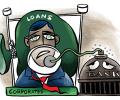
Let all the stakeholders, especially the government, remember that if the Make in India lion needs to roar and rise again, it won't happen unless India Inc rises too, points out Shekaar Subramanian.

Is the SBI chairman leaving the bank in a stronger and better position than what it was? Abhijit Lele finds out.

''Even without major reforms, with a business as usual scenario, and with current inflation trends, we should be clocking around 11 to 12 per cent nominal growth.' 'That is not happening and is a source of worry,' Rathin Roy tells Arup Roychoudhury.

Till such time that a new governance framework comes into being, the progress of reforms in health, education, land, labour, electricity and agriculture could remain fraught with problems, agitations and delays, observes A K Bhattacharya.

Despite the Indian government's recent efforts anecdotal evidence indicates that there has been little change in the extortionist behaviour of a significant proportion of tax and police officials, says Jaimini Bhagwati.

'GST had to come close on the heels of demonetisation as part of the same package.'
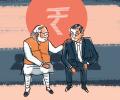
'Urjit Patel was not quite the picture of courage, but even he turned, he had to turn.' 'Perhaps there is something that is far more sinister than what we are aware of, which is the reason for his resigation.'
